Design and Operation of PMM’s with ESP
Disciplines: Production and Operations
Course Description
- This course equips learners with the tools to operate permanent magnet motor (PMM) systems effectively. Artificial lift engineers will learn methods to size ESPs driven by PMMs, ensuring a safe and efficient artificial lift method. As most PMMs require VFDs, the course covers the design, application, installation, maintenance, and troubleshooting of PMM and VFD systems. It also addresses how these systems adapt to changing well conditions in unconventional settings. The course includes theory, case studies, and hands-on practice.
- Agenda
- PMM: Operating Principle
- Design, compare with IM
- Testing and qualification (PMM and VSD control)
- Industry Standards
- Power studies of IM versus PMM systems
- Example procedure
- Power Savings
- Procedures / Operation
- Operation - VSD set ups, the importance of this and what could happen if the drive is not set up properly
- Operation - the do's and don't to changes in control
- Operation - Power optimization on the fly
- Safety Considerations
- Safety - downhole tools and processes for safety during installation trouble shooting and pulling
- Safety - training program
- Safety - installation and pull check list
- Safety - PMM identification when shipped to location
- Alternative applications such as low speed PCP, high speed ESP and linear PMM will be briefly covered.
Learning Level
Intermediate
Course Length
4 Hours
Why Attend
PMM is an alternative motor for ESP technology, originating in the 1990s and evolving in the early 2000s. After being demonstrated as a proven and advanced technology, PMMs have gained increasing popularity. However, unlike induction motors, the technical information related to ESPs is limited. This class presents a valuable opportunity not only to learn new concepts but also to share experiences and gain insightful information.
Who Attends
This course is ideal for Artificial Lift and Production professionals involved in daily ESP operations or continuous improvement initiatives.
CEUs
Participants will receive 0.4 CEUs for completing this 1/2-day course.
Cancellation Policy
All cancellations must be received no later than 14 days prior to the course start date. Cancellations made after the 14-day window will not be refunded. Refunds will not be given due to no show situations.
Training sessions attached to SPE conferences and workshops follow the cancellation policies stated on the event information page. Please check that page for specific cancellation information.
SPE reserves the right to cancel or re-schedule courses at will. Notification of changes will be made as quickly as possible; please keep this in mind when arranging travel, as SPE is not responsible for any fees charged for cancelling or changing travel arrangements.
We reserve the right to substitute course instructors as necessary.
Instructors
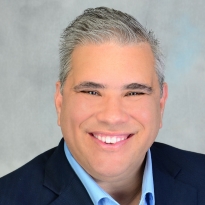 Carlos Yicon is an ESP Specialist with Oxy’s Worldwide Engineering and Operations team. He brings over 25 years of experience in ESP operation, design, and troubleshooting. He has expertise in offshore and onshore operations, focusing on ESP equipment for SAGD, heavy oil, challenging well conditions, and high GOR wells. With significant field experience and knowledge of surface controllers and ESP Permanent Magnet technology, Carlos also contributes to the Society of Petroleum Engineers (SPE) by sharing his expertise with the community.
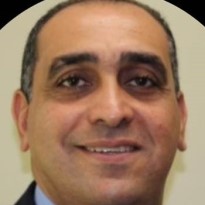 Hany Zackary is the Field Service Quality and Training Manager with Levare, the world’s largest Electric Submersible Pumps and Permanent Magnet Motors provider and has worked 27+ years in the Oil & Gas industry, in all aspects starting in Field Service, Application Engineering and Operations, as a Field Service Manager in Egypt, a lead technical support engineer in the Permian and an account manager in the Gulf of Mexico. Hany is a holder of a BSc. Degree in Electrical Engineering from Ain Shams University in Cairo, Egypt and has been married to Mariana for 20+ years and has two girls.
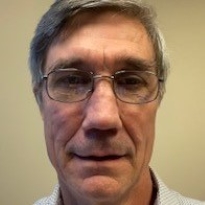 Walter Dinkins is with Levare International, and has worked as electrical engineer for over 30 years at major oilfield services companies, primarily in segment that manufactures electric submersible pumps (ESP) used to accelerate oil production. In addition to technical knowledge of the downhole and surface systems, he has experience in R&D, manufacturing, software development, regional account management and participation on industry standards groups. Walter completed his BS and MS in Electrical Engineering at Oklahoma State University and has a MS in Ceramic Engineering from Georgia Tech. He is a licensed professional engineer in the states of Alaska and Oklahoma. Walter has been married to his life-partner Rebecca for 38 years and has four kids and two grandsons.