Methane Emission Measurement & Mitigation (MEMM)
Disciplines: Health, Safety, Environment, and Sustainability | Production and Operations
Course Description
This one-day session will include a view of best practices for decarbonization with a focus on fugitive methane reduction. It will include global and local examples of carbon regulations, give tools for de-risking regulatory compliances and field-proven methane reduction technology cases. It will be introduced within the framework of the UN’s Sustainable Development Goals (SDGs) and regional Environmental and Social Metrics as proposed by governments or regulators, including the OGMP 2.0 standard. This is especially relevant to oil and gas production and the consequent action/strategies producers need to have in place for Regulators, Banks, Investors and Governments. In particular, the session will include technical discussions regarding key methane management compliance such as fugitive emissions and case studies of implemented solutions – pneumatic device replacement, elimination of tank venting, compressor seal replacement, and elimination/recycling of casing gas. The session will also look at the typical data management requirements. It will also cover strategic planning, emissions quantification methodologies, facility design, data management, pneumatics, compression, leak detection and flaring.
Learning Level
Intermediate
Course Length
1 Day
Why Attend
This course is important so that the senior leaders and technical practitioners can be informed of the immediate actions required, and solutions available, to manage methane emissions. After taking the class you should be able to promote currently available technologies to achieve practical and cost-effective methane mitigation solutions as well as basic Carbon accounting which satisfies the needs of investors or bankers.
Who Attends
Professionals involved in:
- Health, Safety, Security and Environment (HSSE)
- Field Operations
- Engineering
- Production
- Operations & Process Engineering
CEUs
0.8 CEUs (Continuing Education Units) are awarded for this 1-day course.
Cancellation Policy
All cancellations must be received no later than 14 days prior to the course start date. Cancellations made after the 14-day window will not be refunded. Refunds will not be given due to no show situations.
Training sessions attached to SPE conferences and workshops follow the cancellation policies stated on the event information page. Please check that page for specific cancellation information.
SPE reserves the right to cancel or re-schedule courses at will. Notification of changes will be made as quickly as possible; please keep this in mind when arranging travel, as SPE is not responsible for any fees charged for cancelling or changing travel arrangements.
We reserve the right to substitute course instructors as necessary.
Instructors
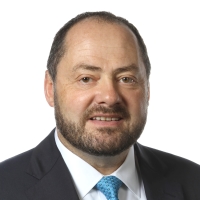 Darcy Spady served as 2018 SPE International President. His theme during his Presidency was Community Consensus and he has a focus on Methane measurement and reduction as founding partner of Carbon Connect International Inc. He has a 33-year career in the Conventional Oil, Heavy Oil and Unconventional Gas business on both the operator and service sector of our industry. He is a graduate in Petroleum Engineering from The University of Alberta.
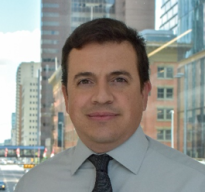 José Villegas has more than 12 years of experience in the oil and gas industry in upstream operations with different international companies such as Wood Group, Schlumberger, Statoil, Shell, and CNRL. Prior to joining Carbon Connect International, he worked as manager of engineering and sustainable energy solutions for General Magnetic, a local small company in Calgary, Alberta. He has a MSc from the University of Calgary in Sustainable Energy Development, where he conducted a feasibility analysis on the implementation of solar PV technology in small businesses in Calgary. He was granted a SEDV Academic Excellence Award in recognition of a meritorious performance. José also holds a BSc in Mechanical Engineering from Universidad Simón Bolívar, where he began to learn everything related to energy conversion and efficiency, climate impact, reliability, among other topics.
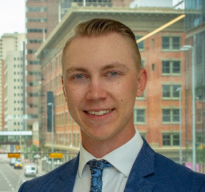 Kristian Martens graduated from the University of Wyoming with a BSc in Petroleum Engineering. He was the 2019-2020 President of the University of Wyoming chapter of the American Association of Drilling Engineers (AADE). He also holds a diploma in Petroleum Engineering Technology from the Southern Alberta Institute of Technology (SAIT). He has experience in field operations, balancing production targets with environmentally and safety conscious practices. At Carbon Connect International, Kristian is applying his technical background and data management skill set to help reduce methane emissions.